
.svg) Product
Product

.png)


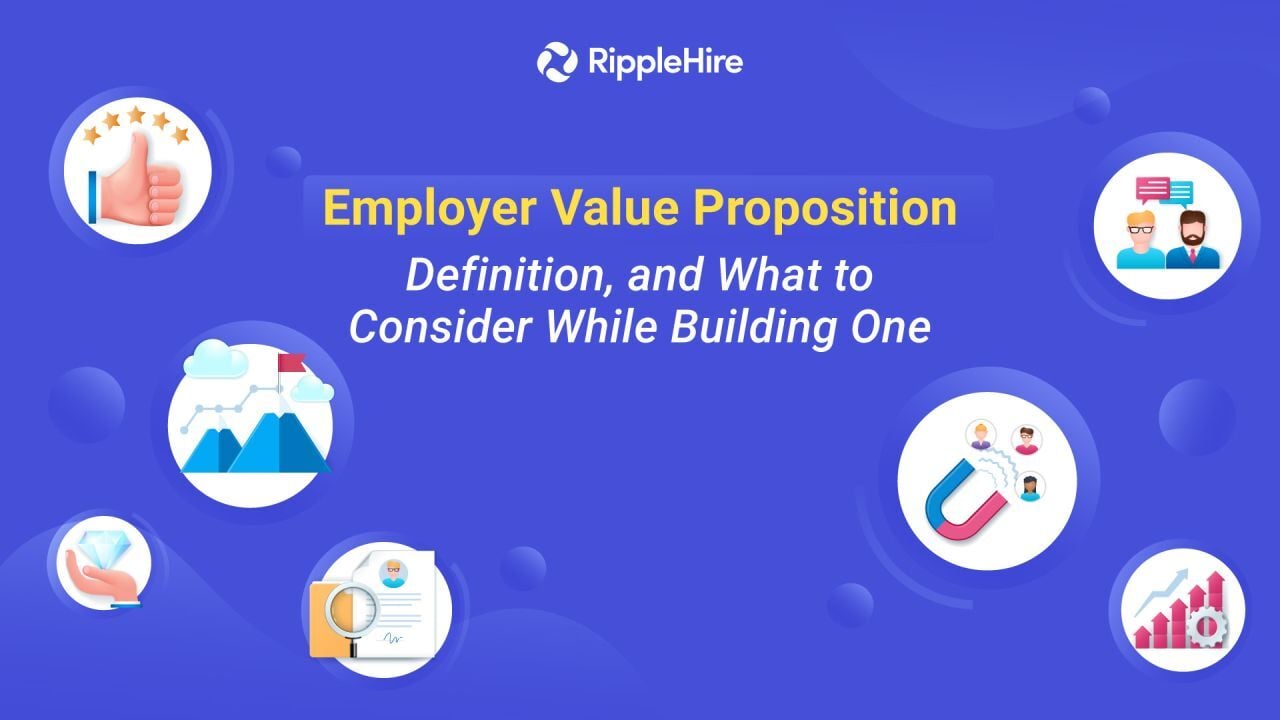


Table of content
What Is an Employer Value Proposition (EVP)? A 2025 Guide for Talent Acquisition Leaders
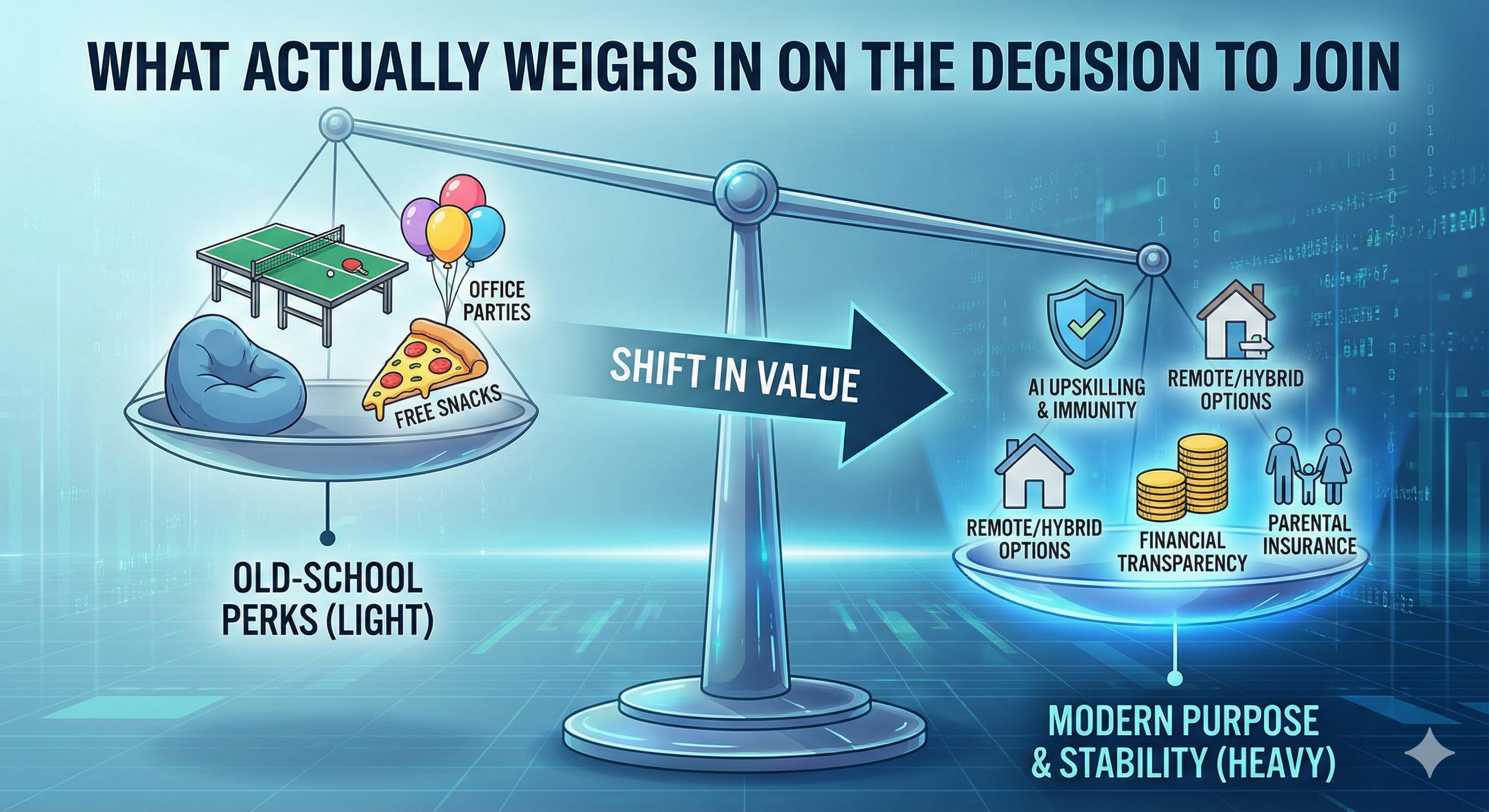
In the last decade, the "Employer Value Proposition" (EVP) was a marketing exercise. It was a battle of "coolness." Who has the best office? Who has the most colorful bean bags?
Who offers free craft beer on Fridays?
In 2026, that era is officially over.
Today’s talent market is defined by three harsh realities: AI Anxiety, Inflation, and Burnout. A candidate dealing with rising living costs and the fear of their skills becoming obsolete does not care about your ping-pong table. They care about survival, stability, and growth.
If you are still selling "fun culture" while your competitors are selling "future-proofing," you aren't just losing candidates—you are losing the best candidates.
This guide redefines the EVP for the modern world. We will move beyond the fluffy definition of "brand" and look at the hard social contract required to win talent in 2026.
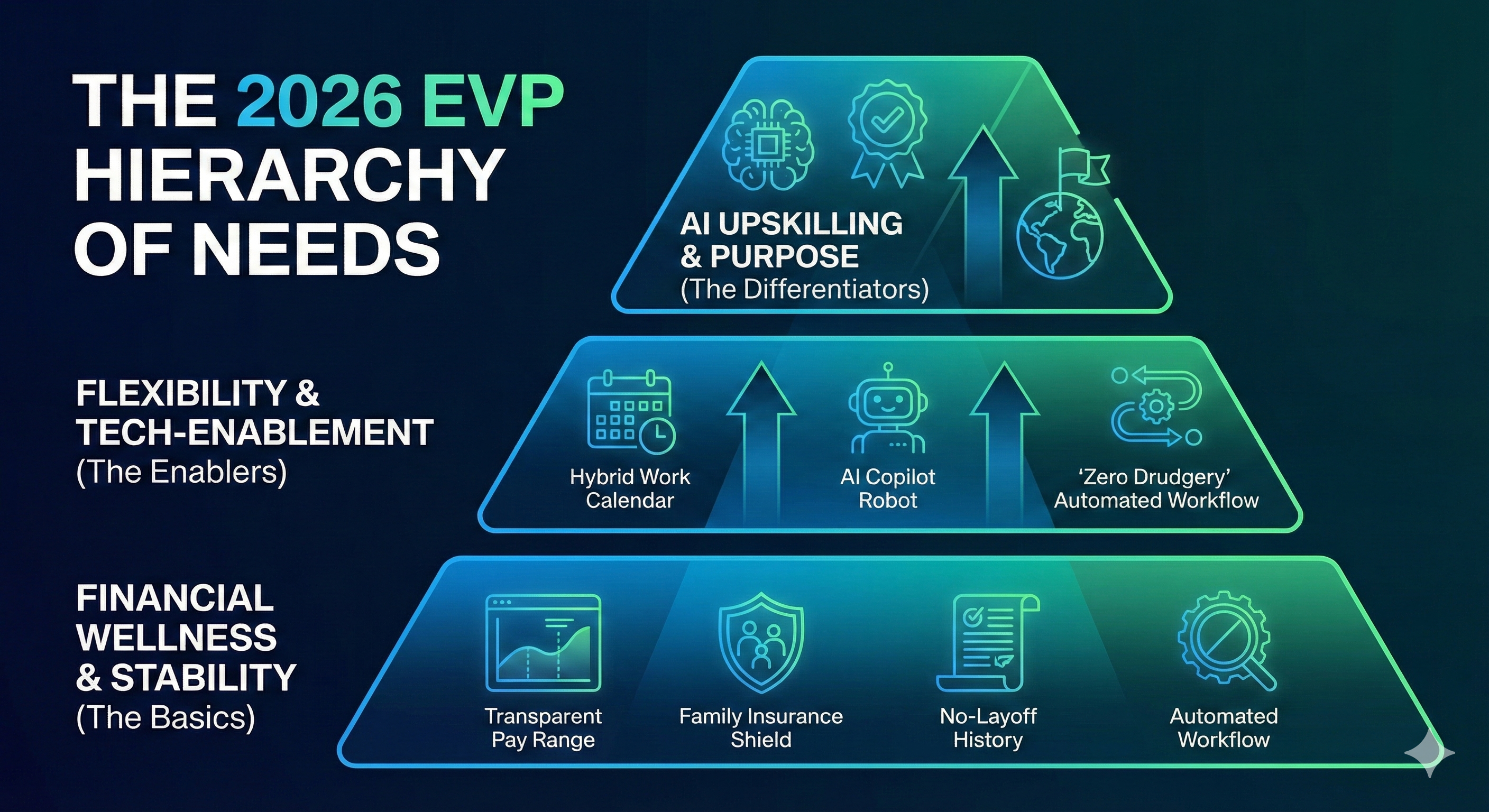
What is an Employee Value Proposition (EVP) really?
Classically, an EVP is the "unique set of benefits an employee receives in return for the skills, capabilities, and experience they bring to a company."
But in 2026, we need a sharper definition:
Your EVP is the answer to the question: "Will joining this company increase my market value or stagnate it?"
It is no longer just about what you give them today (salary); it is about what you equip them with for tomorrow (employability).
The Shift: From "Perks" to "Pillars"
Candidates have moved up the hierarchy of needs.
-
2020 EVP: "We have a great gym and free snacks." (Lifestyle)
-
2026 EVP: "We have a comprehensive mental health policy and an AI-upskilling budget." (Life-preservation)
Pillar 1: The "AI Immunity" Promise (The New #1 Benefit)
The single biggest fear for knowledge workers today is obsolescence. Every developer, copywriter, and HR professional is wondering: "Will an AI agent replace me in 3 years?"
The smartest companies have turned this fear into their strongest selling point. They don't hide from AI; they promise to teach it.
How to build this into your EVP:
-
The Promise: "We don't replace people with AI. We replace 'drudgery' with AI so our people can do strategy."
-
The Proof: Explicitly list the tools you provide. Don't just say "Learning and Development." Say: "Join us and get access to Enterprise Copilot, custom AI agents, and a ₹2 Lakh annual upskilling budget."
When you position your company as a "Career Accelerator" rather than just a job, you signal that joining you is an investment in their own future.
Pillar 2: Financial Wellness & Radical Transparency
"Competitive Salary" is a dead phrase. In an era of high inflation, it means nothing.
To build trust, your EVP must embrace Financial Transparency.
-
Publish Pay Ranges: As discussed in our Job Description Guide, showing the numbers upfront proves you respect their time.
-
Inflation-Adjusted Reviews: Top talent wants to know that their purchasing power won't erode. Explicitly mentioning "Annual Inflation Corrections" in your EVP is a massive differentiator in the Indian market.
-
Wealth Creation (ESOPs): For senior talent, the salary pays the bills, but the ESOPs build the future. Be transparent about your vesting schedules and liquidity events.
Pillar 3: The India Context – "Holistic Stability"
If you are hiring in India, you cannot ignore the cultural nuance of Stability.
While Gen Z talks about "Job Hopping," the underlying desire is often safety for their family. In a volatile tech market where layoffs dominate the news, "Stability" is a premium luxury.
The "Indian Family" EVP:
-
Health Insurance: It’s not just about the employee. Does your policy cover aging parents? Does it cover pre-existing diseases? In India, Parental Insurance Coverage is often a deal-breaker that outweighs a 10% salary hike.
-
The "No-Layoff" History: If your company navigated the last recession without mass layoffs, shout it from the rooftops. That is your strongest trust signal.
-
Tier 2/3 Accessibility: Can they work from their hometown in Indore or Bhubaneswar? The ability to live with parents while earning a metro salary is a massive value driver.
One Size Fails All: The Era of "Micro-EVPs"
You cannot use the same pitch for a 22-year-old React Developer and a 45-year-old VP of Sales. Their anxieties are different, so your value proposition must be different.
1. The Gen Z EVP (Ages 21–27)
-
Core Driver: Velocity & Purpose.
-
The Pitch: "You will ship code to production in Week 1. We are carbon neutral. We don't do 9-to-5; we do 'get it done'."
-
Key Perk: Mental health leaves and "Workation" policies.
2. The Senior Leader EVP (Ages 35+)
-
Core Driver: Autonomy & Wealth.
-
The Pitch: "You own the P&L. No micromanagement. Here is the equity plan."
-
Key Perk: Family health coverage and child education support.
3. The Gig/Contractor EVP
-
Core Driver: Speed & Clarity.
-
The Pitch: "We pay invoices in 7 days. Scope is clearly defined. No scope creep."
How to Build Your 2026 EVP (Step-by-Step)
Do not sit in a boardroom and guess what people want. Build your EVP with data.
Step 1: The "Stay" Interview Audit
Don't just do exit interviews. Do "Stay Interviews" with your top 10 performers. Ask them:
-
"Why do you stay here when recruiters call you?"
-
"What is the one tool/process that makes your job easier?"
-
"What is the one thing that would make you leave tomorrow?"
Step 2: Define Your "Give and Get"
An EVP is a two-way street. Be honest about the friction.
-
The Give (What you offer): Rapid growth, high autonomy, AI tools.
-
The Get (What you expect): High ambiguity, fast pace, ownership.
-
Why this matters: Honesty repels the wrong candidates. If you demand high intensity but market "work-life balance," you will hire people who will quit in 3 months.
Step 3: Validate with "Silver Medalists"
Contact candidates who rejected your offer last year. Ask them: "What did the other company offer that we didn't?" This is your true competitive gap analysis.
The Truth is Your Best Asset
In the end, the best Employer Value Proposition is the truth.
In 2026, candidates have tools like Glassdoor, LinkedIn, and Fishbowl. If your EVP says "Innovation" but your Glassdoor reviews say, "Legacy Bureaucracy," you have failed.
Build an EVP that is grounded in the reality of the modern worker.
Offer them safety from inflation, skills for the AI era, and the flexibility to live a full life. Do that, and you won't just fill seats—you will build a workforce that wants to stay.
FAQs
Q1: What is the most important component of an EVP in 2026? Answer: Upskilling and Employability. Candidates prioritize companies that invest in their continuous learning—specifically in AI and automation tools—ensuring they remain relevant in a changing market. This "AI Immunity" is now more valuable than traditional office perks.
Q2: How does a Hybrid Work policy affect EVP? Answer: Flexibility is no longer a "perk"; it is a "baseline." An EVP that demands 5 days in the office limits your talent pool to a specific radius. An EVP that offers "Remote-First" or "Structured Hybrid" opens up a national talent pool and signals trust in employees.
Q3: How do we measure the success of our EVP? Answer: Don't just look at application volume. Look at "Offer Acceptance Rate" and "First-Year Attrition." If candidates accept offers but leave within 12 months, your EVP was likely "false advertising" that didn't match the reality of the role.
Q4: What is a "Micro-EVP"? Answer: A Micro-EVP is a tailored value proposition for a specific segment of your workforce. Instead of one generic message for everyone, you create specific messaging for different personas (e.g., offering "Learning" to Gen Z vs. "Stability & Insurance" to mid-career parents).
Q5: How does the Indian market differ for EVP strategies? Answer: In India, Family Stability is a massive driver. Benefits like parental insurance coverage, no-layoff history, and the ability to work remotely from Tier-2 cities (living with family) are often valued higher than stock options or office amenities.